
-
AI SEO
- Feb 13, 2026 How to Rank Better, Straight From a Google Search Advocate Feb 13, 2026
-
Company Updates
- Jul 5, 2018 Google Adwords Announces Rebranding Jul 5, 2018
- Jun 21, 2018 Squarespace Is Launching An Email Marketing Platform Jun 21, 2018
- Apr 12, 2018 Facebook Changes Their Algorithm Apr 12, 2018
-
Content Creation
- Jun 21, 2018 Squarespace Is Launching An Email Marketing Platform Jun 21, 2018
- Mar 1, 2018 Viral vs. Valuable Marketing Mar 1, 2018
- Feb 1, 2018 SEO: 3 Marketing Stats to Keep In Mind When It Comes to Search Feb 1, 2018
- Jan 4, 2018 4 Reasons Why Blogging Can Help Your SEO Jan 4, 2018
-
Email Marketing
- Jul 1, 2019 Average Email Open Rates By Industry Jul 1, 2019
- Sep 27, 2018 Squarespace Email Marketing Review Sep 27, 2018
- Jun 21, 2018 Squarespace Is Launching An Email Marketing Platform Jun 21, 2018
-
Facts & Figures
- Jul 19, 2018 How Marketing and Customer Relationship Management (CRM) are Connected Jul 19, 2018
- Jun 7, 2018 Search Engine Market Share Jun 7, 2018
- Mar 15, 2018 Some Quick Stats About Mobile and Marketing Mar 15, 2018
-
Google Ads
- Jul 5, 2018 Google Adwords Announces Rebranding Jul 5, 2018
-
Google Adwords
- Jul 5, 2018 Google Adwords Announces Rebranding Jul 5, 2018
-
Google Analytics
- May 24, 2018 Google Analytics: What Is Referrer Spam? May 24, 2018
- Apr 26, 2018 Reading Google Analytics: Direct Traffic Apr 26, 2018
-
Ineffective Marketing
- Aug 30, 2018 The Importance of Knowing Your Audience Aug 30, 2018
- Jul 19, 2018 How Marketing and Customer Relationship Management (CRM) are Connected Jul 19, 2018
- May 10, 2018 Advertising: Is It Based On Perspective? May 10, 2018
-
Marketing Strategy
- Feb 3, 2022 Marketing From Aristotle: Ethos, Pathos, and Logos Feb 3, 2022
- Mar 17, 2020 Why You Need To Keep Your Marketing During A Crisis Mar 17, 2020
- Jul 10, 2019 The Difference Between PR and Marketing (and where they overlap) Jul 10, 2019
- Jul 1, 2019 Average Email Open Rates By Industry Jul 1, 2019
- Nov 8, 2018 Don’t Leave Out The Psychographics When Building Your Marketing Plan Nov 8, 2018
- Oct 25, 2018 The 5Cs of Marketing Oct 25, 2018
- Oct 11, 2018 The Marketing Mix (Often Called The 4 Ps) Oct 11, 2018
- Sep 13, 2018 How To S.W.O.T. And Improve Your Marketing Plan Sep 13, 2018
- Aug 30, 2018 The Importance of Knowing Your Audience Aug 30, 2018
- Aug 2, 2018 What Place Does Marketing Hold In The Strategic Plan Of An Organization? Aug 2, 2018
- Jul 19, 2018 How Marketing and Customer Relationship Management (CRM) are Connected Jul 19, 2018
- Jul 5, 2018 Google Adwords Announces Rebranding Jul 5, 2018
- May 10, 2018 Advertising: Is It Based On Perspective? May 10, 2018
- Apr 26, 2018 Reading Google Analytics: Direct Traffic Apr 26, 2018
- Mar 15, 2018 Some Quick Stats About Mobile and Marketing Mar 15, 2018
- Mar 1, 2018 Viral vs. Valuable Marketing Mar 1, 2018
-
SEO
- Mar 1, 2021 We Quintupled Our SEO Keywords By Doing This Mar 1, 2021
- Jun 7, 2018 Search Engine Market Share Jun 7, 2018
- Mar 1, 2018 Viral vs. Valuable Marketing Mar 1, 2018
- Feb 15, 2018 SEO: What Is a “Nofollow” Link? Feb 15, 2018
- Feb 1, 2018 SEO: 3 Marketing Stats to Keep In Mind When It Comes to Search Feb 1, 2018
- Jan 4, 2018 4 Reasons Why Blogging Can Help Your SEO Jan 4, 2018
-
Small Business
- Feb 3, 2022 Marketing From Aristotle: Ethos, Pathos, and Logos Feb 3, 2022
- Mar 17, 2020 Why You Need To Keep Your Marketing During A Crisis Mar 17, 2020
- Jul 10, 2019 The Difference Between PR and Marketing (and where they overlap) Jul 10, 2019
- Nov 8, 2018 Don’t Leave Out The Psychographics When Building Your Marketing Plan Nov 8, 2018
- Oct 25, 2018 The 5Cs of Marketing Oct 25, 2018
- Oct 11, 2018 The Marketing Mix (Often Called The 4 Ps) Oct 11, 2018
- Aug 30, 2018 The Importance of Knowing Your Audience Aug 30, 2018
- Aug 16, 2018 Supply Chain Management In The Service Industry Aug 16, 2018
-
Social Media
- Aug 30, 2018 The Importance of Knowing Your Audience Aug 30, 2018
- Jul 19, 2018 How Marketing and Customer Relationship Management (CRM) are Connected Jul 19, 2018
- Apr 12, 2018 Facebook Changes Their Algorithm Apr 12, 2018
- Mar 1, 2018 Viral vs. Valuable Marketing Mar 1, 2018
-
Website Design
- Aug 16, 2018 Supply Chain Management In The Service Industry Aug 16, 2018
- Mar 29, 2018 What is Responsive Web Design? Mar 29, 2018

Marketing From Aristotle: Ethos, Pathos, and Logos
We may want to believe that every new invention and idea is original, but the truth is, a large majority of our everyday culture are merely improvements from the ancient Greeks. Sports, medicine, law, democracy, language, science, math, buildings, showers, theatre and even alarm clocks and vending machines were first invented by the Greeks way back when. As with all of these other topics, marketing can…
We may want to believe that every new invention and idea is original, but the truth is, a large majority of our everyday culture are merely improvements from the ancient Greeks. Sports, medicine, law, democracy, language, science, math, buildings, showers, theatre and even alarm clocks and vending machines were first invented by the Greeks way back when. As with all of these other topics, marketing can find its roots in ancient Greece as well, by none other than the famous Aristotle.
Aristotle left us with many great things to ponder. One of his most influential pieces comes from Rhetoric, a collection of his students’ notes from his lectures that later became a book. In this, he spoke of the Modes of Persuasion: Ethos, Pathos and Logos.
Ethos (authority, credibility, reliability): This is the ethical appeal and tries to convince an audience of the author’s credibility or character.
Pathos (emotion, sympathy, imagination): This is the emotional appeal and tries to persuade an audience by appealing to their emotions.
Logos (logic, rationality, reason): This is the appeal to logic and tries to convince an audience by use of logic and/or reason.
The Modes of Persuasion have been used in marketing forever, and brands use a combination of all 3 to get their message across. This commercial from Subaru is a great example:
Subaru does a good job of using all of the elements together and overlapping.
Ethos and establishing credibility: The granddaughter in the commercial says “Some relationships get better with time…that’s why I got a Crosstrek.” This indicates to the viewer that Subaru has been around for a long time and that their vehicles are reliable. In addition, the commercial actually shows an older Subaru sitting in the grandmother’s driveway, indicating that she still uses her older model.
Pathos and showing emotion. The commercial features a grandmother and a granddaughter bonding, drinking milkshakes, laughing, etc. This appeals to our emotions and gives us a sense of serenity. In addition, the light music used also helps induce a calmness and playfulness. Subaru’s tagline is “Love, it’s what makes Subaru, Subaru.”
Logos and using rationality. At the end of the commercial, we learn that “97% of Subaru vehicles sold in the last 10 years are still on the road.”, showing they are reliable vehicles. The grandmother’s older version also helps subconsciously tell us that Subarus last for a long time since she has not bought a new one.
Subaru doesn’t just use Ethos, Pathos and Logos in their commercials, however. Their entire marketing strategy is built with these. Alan Bethke, Senior Vice President, Marketing at Subaru of America, stated in 2017:
“..the Love campaign, inspired by Subaru owners’ love of their vehicles, loved ones, and causes they keep close to their hearts, continued to build a new identity for Subaru…Under the notion that ‘Love’ is the uniting factor among the brand’s loyal customer base and ‘It’s what makes a Subaru, a Subaru,’ we created a personality to compliment the brand’s quality vehicles…Today, Subaru has a demand that exceeds its supply, resulting in 8 consecutive years of record-breaking sales and 9 consecutive years of sales increases.” — Alan Bethke, Forbes, Source.
We can see Ethos on full display in ads for vehicles, cologne and more with the use of celebrities. The two ads below feature actors Chris Hemsworth and Daniel Craig, yet they aren’t doing anything but standing there. That’s ok, because your brain fills in the gaps and makes the connection between credible (an actor you like) and the brand, which must also be credible, right? If you overthink it, it’s a silly concept — we know these celebrities are getting paid for these ads and that they may not even use them. Regardless, it’s a tried and true method that companies have been doing for a long time:

As brands age, they may require less Ethos to establish credibility or Logos for rationality. An example would be Coca Cola, who has been around for so long that their main goal is just to create top of mind awareness. When brands have been around and are established, their main focus when advertising is usually around Pathos:
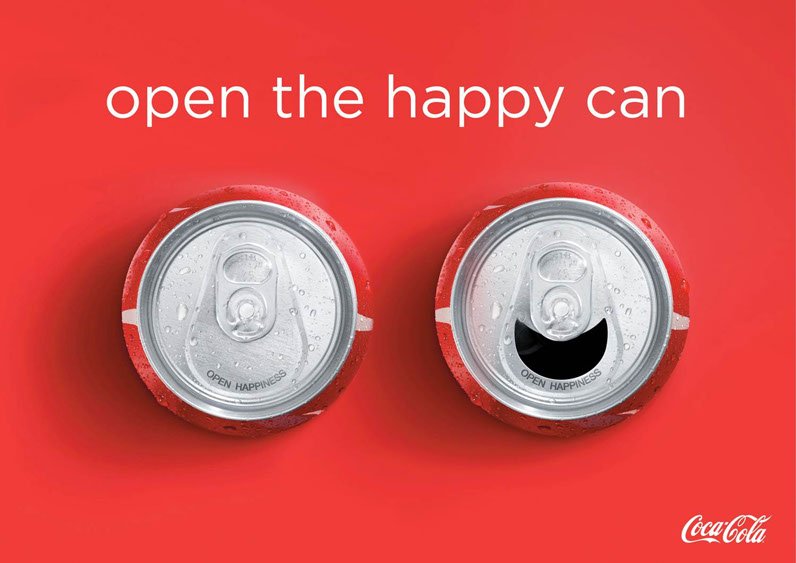
The above print ad uses Pathos by showing the emotion of “happy” and implying drinking Coca-Cola brings happiness.
The use of Ethos, Logos and Pathos by companies goes deeper than just print or television ads, however. Organizations incorporate these concepts into their entire brand — their mission statements, their marketing materials, their positioning, how they train their employees, their PR, etc.
Walmart, for example, states the following on their “About” page:
“From our humble beginnings as a small discount retailer in Rogers, Ark., Walmart has opened thousands of stores in the U.S. and expanded internationally. Through innovation, we’re creating a seamless experience to let customers shop anytime and anywhere online and in stores. We are creating opportunities and bringing value to customers and communities around the globe. Walmart operates approximately 10,500 stores and clubs under 48 banners in 24 countries and eCommerce websites. We employ 2.2 million associates around the world — nearly 1.6 million in the U.S. alone.”
Ethos: 10,500 stores, 24 countries, shop anytime and anywhere
Pathos: humble beginnings, Innovation, seamless experience
Logos: 10,500 stores, 24 countries, 2.2 million associates, bringing value to customers and communities around the globe
Companies use the Modes of Persuasion in their business model to make themselves more than just a company. The average consumer may not consciously pay attention to these but subconsciously, we all do. Organizations need to not just sell a product or service, they need to tell a story, and that’s where Aristotle’s framework helps.
The 5Cs of Marketing
We previously touched on the 4Ps of marketing, also called the Marketing Mix, now let’s talk about the 5 C’s of marketing: Company, Context, Customers, Competitors and Collaborators.
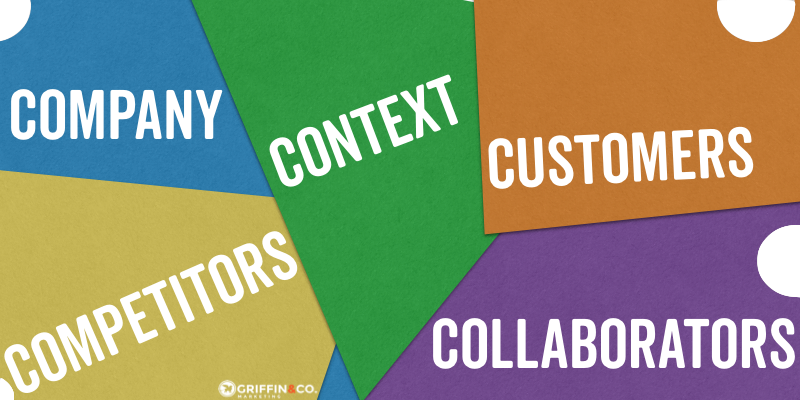
We previously touched on the 4Ps of marketing, also called the Marketing Mix, now let’s talk about the 5 C’s of marketing:
Company
Context
Customers
Competitors
Collaborators
(This is not to be confused with “The 4 Cs and Ps” - read here)
The 5 C’s of Marketing are used for constructing an effective marketing strategy:
Company: Are your company’s resources and capabilities in a position to meet customer’s needs? Start by creating a SWOT analysis HERE.
Context (or climate): Are there limitations due to political (Trade regulations, taxes, legal issues, labor laws), economic (Labor costs, growth rate), social (demographics, culture, education, etc) or technological trends (does it affect cost)? This is also called the PEST analysis.
Customers: Analyze the needs, wants and characteristics of current and potential customers. Try looking at market segments, how frequently purchases are made, how many items are purchased, will the needs of the customer change over time, etc.
Competitors: Look at the strengths and weaknesses of current and potential competitors as well as trends in the competitive environment.
Collaborators: Make a list of potential distributors, suppliers, or any other party that could help with your goals.
Companies that make use of the 5 C’s of Marketing have a clearer vision of what they can accomplish, so give it a try or give us a shout to help out!
What Place Does Marketing Hold In The Strategic Plan Of An Organization?
Ask many people what they think marketing is and they will group it in the same category of sales. The truth is that marketing is way more than that, the collective process of…
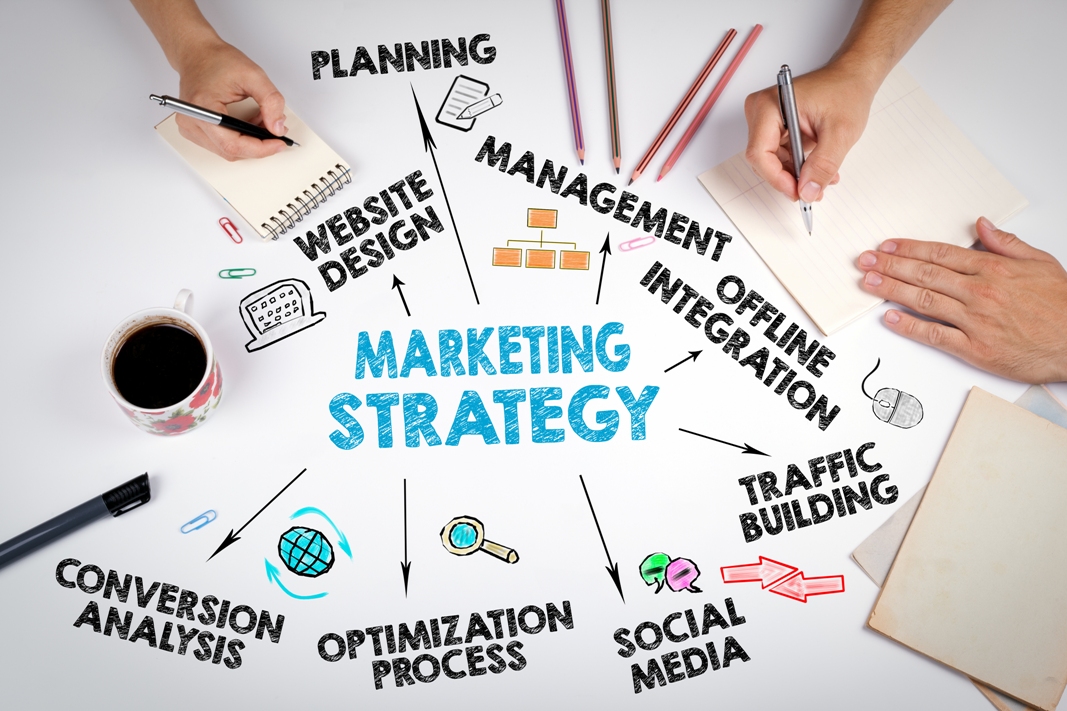
Ask many people what they think marketing is and they will group it in the same category of sales. When applying for a job, many times one will see the category of “marketing/sales” only to find out that the job is purely sales or a graphic designer position. The truth is that marketing is the collective process of things like sales, public relations, conversion analysis, traffic, advertising, community involvement, pricing, media planning, marketing research, distribution and so on. Marketing is the overall process of the inception of an idea all the way to putting the product in the hands of the consumer or business.
According to the U.S. Small Business Administration:
“Marketing is your most important organizing tool. There are four basic aspects of marketing, often called the four Ps:
Product: The item or service you sell.
Price: The amount you charge for your product or service.
Promote: The ways you inform your market as to who, what, and where you are.
Provide: The channels you use to take the product to the customer.
As you can see, marketing encompasses much more than just advertising or selling. For example, a major part of marketing involves researching your customers: What do they want? What can they afford? What do they think? Your understanding and application of the answers to such questions play a major role in the success or failure of your business.” - SBA, 2014
So, what role does marketing hold in the strategic plan of an organization? Answer: AN ESSENTIAL ONE. When, for example, a candle shop opens and wants to sell candles to consumers, where do they start? First you need to find a location that will be convenient for potential customers to find you without going way out of their way; after all, they could just go to Wal-Mart, so why go to your candle store or order from your website? Next, what advantages does your store or website have that will make people choose you over competitors? Maybe a knowledgeable staff on the products, special items that are not easily available at other places, cheaper prices, and so on. There also has to be a way to get the word out, otherwise no one will know about your store, that’s where advertising gets into the mix. Although, if you spend $100 on advertising but only sell $60 worth of products then was it worth it? That’s where media planning, pricing, and distribution/logistics come into play. The customer comes into the store, buys a product, then what? Did the customer have a unique experience? Will he or she come back? That’s where community involvement and public relations come into play.
To be successful, there has to be a way to let the customers know about you, sell the products, fix problems and still be profitable. This process is marketing and it is crucial to any organization.
References:
U.S. Small Business Administration. (Retrieved 2014). What does marketing involve? U.S. Small Business Administration. Retrieved from http://www.sba.gov/content/what-does-marketing-involve