
-
AI SEO
- Feb 13, 2026 How to Rank Better, Straight From a Google Search Advocate Feb 13, 2026
-
Company Updates
- Jul 5, 2018 Google Adwords Announces Rebranding Jul 5, 2018
- Jun 21, 2018 Squarespace Is Launching An Email Marketing Platform Jun 21, 2018
- Apr 12, 2018 Facebook Changes Their Algorithm Apr 12, 2018
-
Content Creation
- Jun 21, 2018 Squarespace Is Launching An Email Marketing Platform Jun 21, 2018
- Mar 1, 2018 Viral vs. Valuable Marketing Mar 1, 2018
- Feb 1, 2018 SEO: 3 Marketing Stats to Keep In Mind When It Comes to Search Feb 1, 2018
- Jan 4, 2018 4 Reasons Why Blogging Can Help Your SEO Jan 4, 2018
-
Email Marketing
- Jul 1, 2019 Average Email Open Rates By Industry Jul 1, 2019
- Sep 27, 2018 Squarespace Email Marketing Review Sep 27, 2018
- Jun 21, 2018 Squarespace Is Launching An Email Marketing Platform Jun 21, 2018
-
Facts & Figures
- Jul 19, 2018 How Marketing and Customer Relationship Management (CRM) are Connected Jul 19, 2018
- Jun 7, 2018 Search Engine Market Share Jun 7, 2018
- Mar 15, 2018 Some Quick Stats About Mobile and Marketing Mar 15, 2018
-
Google Ads
- Jul 5, 2018 Google Adwords Announces Rebranding Jul 5, 2018
-
Google Adwords
- Jul 5, 2018 Google Adwords Announces Rebranding Jul 5, 2018
-
Google Analytics
- May 24, 2018 Google Analytics: What Is Referrer Spam? May 24, 2018
- Apr 26, 2018 Reading Google Analytics: Direct Traffic Apr 26, 2018
-
Ineffective Marketing
- Aug 30, 2018 The Importance of Knowing Your Audience Aug 30, 2018
- Jul 19, 2018 How Marketing and Customer Relationship Management (CRM) are Connected Jul 19, 2018
- May 10, 2018 Advertising: Is It Based On Perspective? May 10, 2018
-
Marketing Strategy
- Feb 3, 2022 Marketing From Aristotle: Ethos, Pathos, and Logos Feb 3, 2022
- Mar 17, 2020 Why You Need To Keep Your Marketing During A Crisis Mar 17, 2020
- Jul 10, 2019 The Difference Between PR and Marketing (and where they overlap) Jul 10, 2019
- Jul 1, 2019 Average Email Open Rates By Industry Jul 1, 2019
- Nov 8, 2018 Don’t Leave Out The Psychographics When Building Your Marketing Plan Nov 8, 2018
- Oct 25, 2018 The 5Cs of Marketing Oct 25, 2018
- Oct 11, 2018 The Marketing Mix (Often Called The 4 Ps) Oct 11, 2018
- Sep 13, 2018 How To S.W.O.T. And Improve Your Marketing Plan Sep 13, 2018
- Aug 30, 2018 The Importance of Knowing Your Audience Aug 30, 2018
- Aug 2, 2018 What Place Does Marketing Hold In The Strategic Plan Of An Organization? Aug 2, 2018
- Jul 19, 2018 How Marketing and Customer Relationship Management (CRM) are Connected Jul 19, 2018
- Jul 5, 2018 Google Adwords Announces Rebranding Jul 5, 2018
- May 10, 2018 Advertising: Is It Based On Perspective? May 10, 2018
- Apr 26, 2018 Reading Google Analytics: Direct Traffic Apr 26, 2018
- Mar 15, 2018 Some Quick Stats About Mobile and Marketing Mar 15, 2018
- Mar 1, 2018 Viral vs. Valuable Marketing Mar 1, 2018
-
SEO
- Mar 1, 2021 We Quintupled Our SEO Keywords By Doing This Mar 1, 2021
- Jun 7, 2018 Search Engine Market Share Jun 7, 2018
- Mar 1, 2018 Viral vs. Valuable Marketing Mar 1, 2018
- Feb 15, 2018 SEO: What Is a “Nofollow” Link? Feb 15, 2018
- Feb 1, 2018 SEO: 3 Marketing Stats to Keep In Mind When It Comes to Search Feb 1, 2018
- Jan 4, 2018 4 Reasons Why Blogging Can Help Your SEO Jan 4, 2018
-
Small Business
- Feb 3, 2022 Marketing From Aristotle: Ethos, Pathos, and Logos Feb 3, 2022
- Mar 17, 2020 Why You Need To Keep Your Marketing During A Crisis Mar 17, 2020
- Jul 10, 2019 The Difference Between PR and Marketing (and where they overlap) Jul 10, 2019
- Nov 8, 2018 Don’t Leave Out The Psychographics When Building Your Marketing Plan Nov 8, 2018
- Oct 25, 2018 The 5Cs of Marketing Oct 25, 2018
- Oct 11, 2018 The Marketing Mix (Often Called The 4 Ps) Oct 11, 2018
- Aug 30, 2018 The Importance of Knowing Your Audience Aug 30, 2018
- Aug 16, 2018 Supply Chain Management In The Service Industry Aug 16, 2018
-
Social Media
- Aug 30, 2018 The Importance of Knowing Your Audience Aug 30, 2018
- Jul 19, 2018 How Marketing and Customer Relationship Management (CRM) are Connected Jul 19, 2018
- Apr 12, 2018 Facebook Changes Their Algorithm Apr 12, 2018
- Mar 1, 2018 Viral vs. Valuable Marketing Mar 1, 2018
-
Website Design
- Aug 16, 2018 Supply Chain Management In The Service Industry Aug 16, 2018
- Mar 29, 2018 What is Responsive Web Design? Mar 29, 2018
The Importance of Knowing Your Audience
I recently attended a presentation by a “Digital Marketing Expert.” Yes, I was scoping out the competition. However, it seems I have nothing to worry about; and not because of his lack of knowledge or expertise, but because of, ironically, his own marketing tactics.

I recently attended a presentation by a “Digital Marketing Expert.” Yes, I was scoping out the competition. However, it seems I have nothing to worry about; and not because of his lack of knowledge or expertise, but because of, ironically, his own marketing tactics.
This particular event was hosted by a local chamber of commerce and was a 25 minute presentation from this gentleman on social media advertising, mobile marketing and websites. If I could sum up the theme, I would call it “Ways to Make Your Business Stay Trendy and Hip to Younger Audiences.” The attendees, minus myself and a few select individuals, were older business owners who may not have the most up-to-date website or know a ton about social media (hence why they came to the event).
The presentation was a well-thought-out PowerPoint and he made some really good points. Afterwards, I approached him to compliment his notes and ask if we can stay connected...then I asked for his business card. His response? “Oh I don’t carry business cards, they’re outdated.”
I understand what his method is. His company is in digital advertising, a newer medium and therefore is on the cutting edge, and business cards are a thing of the past. That may be true, but as I looked around to others asking him the same question, there was plenty of confusion across the many faces. This guy had just spent 25 minutes telling everyone his company could solve their social media problems and yet did not have a simple way for potential customers to reach out to him. Sure, people could connect with him on Linkedin or “like” his company’s Facebook page, but that’s not the audience that was in attendance, and those people would still need a name to search for. Many of these business owners were old fashioned (I talked with several of them). They like business cards. They like a simple email or phone number to reach out to and don’t want to mess with messaging on social media or finding the contact page of a website.
The point is, don’t give a presentation to small business owners who don’t know about social media and tell them you can handle their social media and then make the only way to contact you through said social media, which they would need you to show them how, but they can’t, because they can’t contact you...
Know Your Audience.
How Marketing and Customer Relationship Management (CRM) are Connected
Every business knows that Customer Relationship Management (CRM) and Marketing go hand-in-hand. Do all of these businesses know why though?
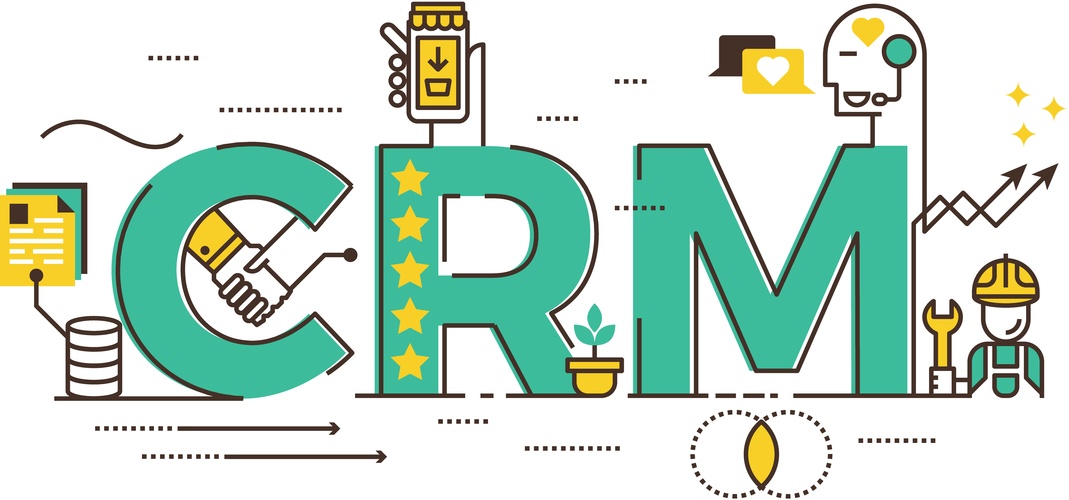
Every business knows that Customer Relationship Management (CRM) and Marketing go hand-in-hand. Do all of these businesses know why though? By learning what customers want, the marketing can be more appropriately tailored to suit the target’s needs.
REPEAT CUSTOMERS
50, 30, even 20 years ago, the main goal was to sell a product to a customer, then move on to the next one. Now, companies have realized that repeat business can be as valuable, if not more, than one-time customers. According to About.com: Marketing, “repeat customers spend 33% more than new customers.” Colin Shaw, an “Influencer” on LinkedIn, also notes “The probability of selling to an existing customer is 60 – 70%. The probability of selling to a new prospect is 5-20%… It costs 6–7 times more to acquire a new customer than retain an existing one.” So, while gaining new business is important, it is also EXTREMELY important to keep your existing customers happy too.
CONSUMER’S VOICE
Another factor for companies to consider is not only how much monetary gain they will have from a repeat customer, but also how much of a reach that customer has to others via the Internet. If a customer is pleased with a certain product, they have the outlet to voice their positive opinion online. In the same sense, if a customer is not happy with a company or product, they can post negative comments online. Both reasons show why customer relationship management is important. Laura Lake of About.com also stated “Referrals among repeat customers are 107% greater than non-customers.” Also, maybe it’s not a bad product, but the service itself. Mr. Shaw says “A customer is 4 times more likely to defect to a competitor if the problem is service-related than price or product-related [and] for every customer complaint there are 26 other unhappy customers who have remained silent.”
ARE YOU LISTENING?
One negative review by a highly trafficked website can undo months of marketing, so it is important for companies to consider this into their marketing plan – by monitoring online activity such as blogs and social media. Another marketing item to consider related to customer relationship management is the opportunity to be connected, which can have valuable information. A customer who would like to receive emails from a company, or a customer who becomes a fan of a company on Facebook, is giving the organization an opportunity to connect with them personally, which can yield great insight into the habits, likes, and dislikes of customers or potential customers. There is also the ability to have a marketing plan that involves customer interaction. A company should strive for a customer that wants to visit their site and engage with them.
In short, marketing and customer relationship management are connected. Customer relationship management gives companies the chance to earn trust, please customers, and gain insight for their marketing plans.
References:
Lake, L. (2018). Customer relationships are key to your marketing strategy. About.com: Marketing. Retrieved from http://marketing.about.com/od/relationshipmarketing/a/crmstrategy.htm
Shaw, C. (2018). 15 statistics that should change the business world, but haven’t. LinkedIn. Retrieved from http://www.linkedin.com/today/post/article/20130604134550-284615-15-statistics-that-should-change-the-business-world-but-haven-t

Facebook Changes Their Algorithm
In response to the “fake news” being circulated around social media, Facebook is changing up their algorithm. Of course, there’s a driving force behind the change: advertisers are pulling their ads…
In response to the “fake news” being circulated around social media, Facebook is changing up their algorithm. Of course, there’s a driving force behind the change: advertisers are pulling their ads. Unilever, for example, said in a press release that “the industry [should] work together to improve transparency and rebuild consumer trust in an era of fake news and toxic online content.” Unilever CMO Chris Weed continued, “Across the world, dramatic shifts are taking place in people’s trust, particularly in media. We are seeing a critical separation of how people trust social media and more ‘traditional’ media. In the US only less than a third of people now trust social media (30%), whilst almost two thirds trust traditional media (58%)....The wider impact of digital on our society and the swamp that is the digital supply chain has become a consumer issue.”
Keep an eye on more changes to come to as Facebook continues updating their algorithm.
References:
Unilever will not invest in online platforms that create division. (2017). Unilever. Source: https://www.unilever.com/news/press-releases/2018/unilever-will-not-invest-in-online-platforms-that-create-division.html

Viral vs. Valuable Marketing
Seth Godin, known to many as the “Marketing Guru,” defines viral marketing as, “an idea that spreads–and an idea that while it is spreading actually helps market your business or cause (Godin, 2008).”

Seth Godin, known to many as the “Marketing Guru,” defines viral marketing as, “an idea that spreads–and an idea that while it is spreading actually helps market your business or cause (Godin, 2008).”
In television and movies, viral marketing is often portrayed as any advertising done on social media sites such as Facebook, Twitter, or YouTube. However, this is not viral marketing, only online marketing. Dictionary.com defines viral as, “pertaining to or involving the spreading of information and opinions about a product or service from person to person, especially on the Internet or in e-mails” as well as “becoming very popular by circulating quickly from person to person, especially through the Internet (Dictionary.com, 2018).”
The main purpose of viral marketing is to push a message out so unique and clever that people want to spread it. Many times the way in which this is achieved is by doing a commercial where the brand is not highlighted as much as the story or message. An example can be found in one my all time favorite commercials, Kmart’s ship my pants. While some may consider the humor crude, the commercial was entertaining enough to receive oh-so-many retweets on Twitter, over 16 million YouTube views, and even media attention. USA Today reported, “Some social media users deemed the commercial, created by ad agency Draftfcb Chicago, ‘gross’ and ‘vulgar,’ while many gave kudos to Kmart for having an edgy sense of humor (Petrecca, 2013).”
The Kmart commercial went viral, but did it earn Kmart extra business? Those numbers are harder to track and as Seth Godin also points out, “Something being viral is not, in an of itself, viral marketing. Who cares that 32,000,000 people saw your stupid video? It didn’t market you or your business in a tangible, useful way (Godin, 2008).”
In the current year of 2018, there are so many social media sites it can be difficult to navigate through them, but businesses have found different ways to utilize and harness this power. People are talking on these social media sites, so why not have them talk about a brand? The trick is to find a way to convey a business message or brand through a creative way that makes it seem like it’s not a commercial. If done correctly, people will want to share what they have seen on YouTube, Twitter, Facebook, and more.
As Dave Kerpen, author of Likeable Social Media, once stated, “Videos that ‘go viral’ are more often than not accidental! Creating a video with the intent of it going viral is bound to fail. Rather than having a goal of ‘going viral’ you should have a goal of ‘being valuable.’ Create content that is valuable, entertaining, and informative (Kerpen, 2012).”
References:
Godin, S. (2008). What is viral marketing?. Seth’s Blog. Retrieved from http://sethgodin.typepad.com/seths_blog/2008/12/what-is-viral-m.html
Kerpen, D. (2012). How to: Make a viral video. Likeable Media. Retrieved from http://www.likeable.com/blog/2012/07/how-to-make-a-viral-video/
Petrecca, L. (2013). Kmart’s ‘ship my pants’ ad causes shockwaves and smiles. USA Today. Retrieved from http://www.usatoday.com/story/news/2013/04/15/kmart-ship-my-pants-commercial-ad/2084131/
Viral. (2018). Dictionary.com. Retrieved from http://dictionary.reference.com/browse/viral?s=t