
-
AI SEO
- Feb 13, 2026 How to Rank Better, Straight From a Google Search Advocate Feb 13, 2026
-
Company Updates
- Jul 5, 2018 Google Adwords Announces Rebranding Jul 5, 2018
- Jun 21, 2018 Squarespace Is Launching An Email Marketing Platform Jun 21, 2018
- Apr 12, 2018 Facebook Changes Their Algorithm Apr 12, 2018
-
Content Creation
- Jun 21, 2018 Squarespace Is Launching An Email Marketing Platform Jun 21, 2018
- Mar 1, 2018 Viral vs. Valuable Marketing Mar 1, 2018
- Feb 1, 2018 SEO: 3 Marketing Stats to Keep In Mind When It Comes to Search Feb 1, 2018
- Jan 4, 2018 4 Reasons Why Blogging Can Help Your SEO Jan 4, 2018
-
Email Marketing
- Jul 1, 2019 Average Email Open Rates By Industry Jul 1, 2019
- Sep 27, 2018 Squarespace Email Marketing Review Sep 27, 2018
- Jun 21, 2018 Squarespace Is Launching An Email Marketing Platform Jun 21, 2018
-
Facts & Figures
- Jul 19, 2018 How Marketing and Customer Relationship Management (CRM) are Connected Jul 19, 2018
- Jun 7, 2018 Search Engine Market Share Jun 7, 2018
- Mar 15, 2018 Some Quick Stats About Mobile and Marketing Mar 15, 2018
-
Google Ads
- Jul 5, 2018 Google Adwords Announces Rebranding Jul 5, 2018
-
Google Adwords
- Jul 5, 2018 Google Adwords Announces Rebranding Jul 5, 2018
-
Google Analytics
- May 24, 2018 Google Analytics: What Is Referrer Spam? May 24, 2018
- Apr 26, 2018 Reading Google Analytics: Direct Traffic Apr 26, 2018
-
Ineffective Marketing
- Aug 30, 2018 The Importance of Knowing Your Audience Aug 30, 2018
- Jul 19, 2018 How Marketing and Customer Relationship Management (CRM) are Connected Jul 19, 2018
- May 10, 2018 Advertising: Is It Based On Perspective? May 10, 2018
-
Marketing Strategy
- Feb 3, 2022 Marketing From Aristotle: Ethos, Pathos, and Logos Feb 3, 2022
- Mar 17, 2020 Why You Need To Keep Your Marketing During A Crisis Mar 17, 2020
- Jul 10, 2019 The Difference Between PR and Marketing (and where they overlap) Jul 10, 2019
- Jul 1, 2019 Average Email Open Rates By Industry Jul 1, 2019
- Nov 8, 2018 Don’t Leave Out The Psychographics When Building Your Marketing Plan Nov 8, 2018
- Oct 25, 2018 The 5Cs of Marketing Oct 25, 2018
- Oct 11, 2018 The Marketing Mix (Often Called The 4 Ps) Oct 11, 2018
- Sep 13, 2018 How To S.W.O.T. And Improve Your Marketing Plan Sep 13, 2018
- Aug 30, 2018 The Importance of Knowing Your Audience Aug 30, 2018
- Aug 2, 2018 What Place Does Marketing Hold In The Strategic Plan Of An Organization? Aug 2, 2018
- Jul 19, 2018 How Marketing and Customer Relationship Management (CRM) are Connected Jul 19, 2018
- Jul 5, 2018 Google Adwords Announces Rebranding Jul 5, 2018
- May 10, 2018 Advertising: Is It Based On Perspective? May 10, 2018
- Apr 26, 2018 Reading Google Analytics: Direct Traffic Apr 26, 2018
- Mar 15, 2018 Some Quick Stats About Mobile and Marketing Mar 15, 2018
- Mar 1, 2018 Viral vs. Valuable Marketing Mar 1, 2018
-
SEO
- Mar 1, 2021 We Quintupled Our SEO Keywords By Doing This Mar 1, 2021
- Jun 7, 2018 Search Engine Market Share Jun 7, 2018
- Mar 1, 2018 Viral vs. Valuable Marketing Mar 1, 2018
- Feb 15, 2018 SEO: What Is a “Nofollow” Link? Feb 15, 2018
- Feb 1, 2018 SEO: 3 Marketing Stats to Keep In Mind When It Comes to Search Feb 1, 2018
- Jan 4, 2018 4 Reasons Why Blogging Can Help Your SEO Jan 4, 2018
-
Small Business
- Feb 3, 2022 Marketing From Aristotle: Ethos, Pathos, and Logos Feb 3, 2022
- Mar 17, 2020 Why You Need To Keep Your Marketing During A Crisis Mar 17, 2020
- Jul 10, 2019 The Difference Between PR and Marketing (and where they overlap) Jul 10, 2019
- Nov 8, 2018 Don’t Leave Out The Psychographics When Building Your Marketing Plan Nov 8, 2018
- Oct 25, 2018 The 5Cs of Marketing Oct 25, 2018
- Oct 11, 2018 The Marketing Mix (Often Called The 4 Ps) Oct 11, 2018
- Aug 30, 2018 The Importance of Knowing Your Audience Aug 30, 2018
- Aug 16, 2018 Supply Chain Management In The Service Industry Aug 16, 2018
-
Social Media
- Aug 30, 2018 The Importance of Knowing Your Audience Aug 30, 2018
- Jul 19, 2018 How Marketing and Customer Relationship Management (CRM) are Connected Jul 19, 2018
- Apr 12, 2018 Facebook Changes Their Algorithm Apr 12, 2018
- Mar 1, 2018 Viral vs. Valuable Marketing Mar 1, 2018
-
Website Design
- Aug 16, 2018 Supply Chain Management In The Service Industry Aug 16, 2018
- Mar 29, 2018 What is Responsive Web Design? Mar 29, 2018

Marketing From Aristotle: Ethos, Pathos, and Logos
We may want to believe that every new invention and idea is original, but the truth is, a large majority of our everyday culture are merely improvements from the ancient Greeks. Sports, medicine, law, democracy, language, science, math, buildings, showers, theatre and even alarm clocks and vending machines were first invented by the Greeks way back when. As with all of these other topics, marketing can…
We may want to believe that every new invention and idea is original, but the truth is, a large majority of our everyday culture are merely improvements from the ancient Greeks. Sports, medicine, law, democracy, language, science, math, buildings, showers, theatre and even alarm clocks and vending machines were first invented by the Greeks way back when. As with all of these other topics, marketing can find its roots in ancient Greece as well, by none other than the famous Aristotle.
Aristotle left us with many great things to ponder. One of his most influential pieces comes from Rhetoric, a collection of his students’ notes from his lectures that later became a book. In this, he spoke of the Modes of Persuasion: Ethos, Pathos and Logos.
Ethos (authority, credibility, reliability): This is the ethical appeal and tries to convince an audience of the author’s credibility or character.
Pathos (emotion, sympathy, imagination): This is the emotional appeal and tries to persuade an audience by appealing to their emotions.
Logos (logic, rationality, reason): This is the appeal to logic and tries to convince an audience by use of logic and/or reason.
The Modes of Persuasion have been used in marketing forever, and brands use a combination of all 3 to get their message across. This commercial from Subaru is a great example:
Subaru does a good job of using all of the elements together and overlapping.
Ethos and establishing credibility: The granddaughter in the commercial says “Some relationships get better with time…that’s why I got a Crosstrek.” This indicates to the viewer that Subaru has been around for a long time and that their vehicles are reliable. In addition, the commercial actually shows an older Subaru sitting in the grandmother’s driveway, indicating that she still uses her older model.
Pathos and showing emotion. The commercial features a grandmother and a granddaughter bonding, drinking milkshakes, laughing, etc. This appeals to our emotions and gives us a sense of serenity. In addition, the light music used also helps induce a calmness and playfulness. Subaru’s tagline is “Love, it’s what makes Subaru, Subaru.”
Logos and using rationality. At the end of the commercial, we learn that “97% of Subaru vehicles sold in the last 10 years are still on the road.”, showing they are reliable vehicles. The grandmother’s older version also helps subconsciously tell us that Subarus last for a long time since she has not bought a new one.
Subaru doesn’t just use Ethos, Pathos and Logos in their commercials, however. Their entire marketing strategy is built with these. Alan Bethke, Senior Vice President, Marketing at Subaru of America, stated in 2017:
“..the Love campaign, inspired by Subaru owners’ love of their vehicles, loved ones, and causes they keep close to their hearts, continued to build a new identity for Subaru…Under the notion that ‘Love’ is the uniting factor among the brand’s loyal customer base and ‘It’s what makes a Subaru, a Subaru,’ we created a personality to compliment the brand’s quality vehicles…Today, Subaru has a demand that exceeds its supply, resulting in 8 consecutive years of record-breaking sales and 9 consecutive years of sales increases.” — Alan Bethke, Forbes, Source.
We can see Ethos on full display in ads for vehicles, cologne and more with the use of celebrities. The two ads below feature actors Chris Hemsworth and Daniel Craig, yet they aren’t doing anything but standing there. That’s ok, because your brain fills in the gaps and makes the connection between credible (an actor you like) and the brand, which must also be credible, right? If you overthink it, it’s a silly concept — we know these celebrities are getting paid for these ads and that they may not even use them. Regardless, it’s a tried and true method that companies have been doing for a long time:

As brands age, they may require less Ethos to establish credibility or Logos for rationality. An example would be Coca Cola, who has been around for so long that their main goal is just to create top of mind awareness. When brands have been around and are established, their main focus when advertising is usually around Pathos:
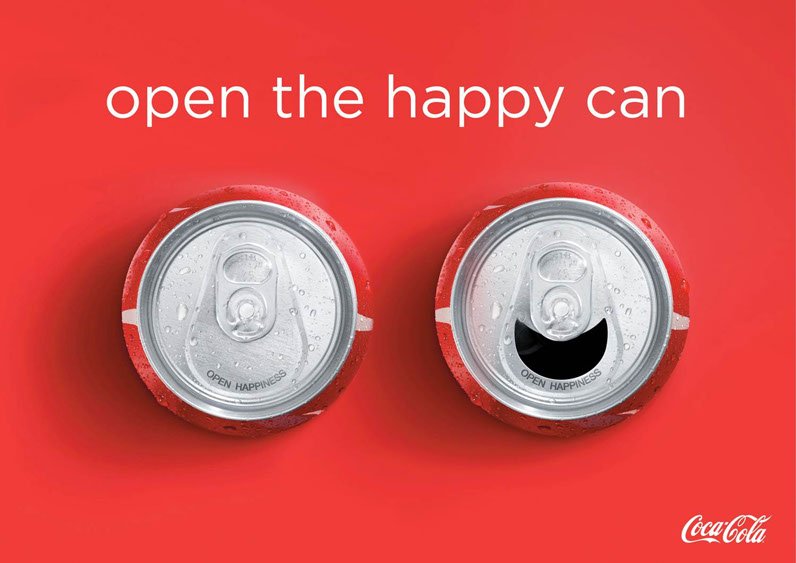
The above print ad uses Pathos by showing the emotion of “happy” and implying drinking Coca-Cola brings happiness.
The use of Ethos, Logos and Pathos by companies goes deeper than just print or television ads, however. Organizations incorporate these concepts into their entire brand — their mission statements, their marketing materials, their positioning, how they train their employees, their PR, etc.
Walmart, for example, states the following on their “About” page:
“From our humble beginnings as a small discount retailer in Rogers, Ark., Walmart has opened thousands of stores in the U.S. and expanded internationally. Through innovation, we’re creating a seamless experience to let customers shop anytime and anywhere online and in stores. We are creating opportunities and bringing value to customers and communities around the globe. Walmart operates approximately 10,500 stores and clubs under 48 banners in 24 countries and eCommerce websites. We employ 2.2 million associates around the world — nearly 1.6 million in the U.S. alone.”
Ethos: 10,500 stores, 24 countries, shop anytime and anywhere
Pathos: humble beginnings, Innovation, seamless experience
Logos: 10,500 stores, 24 countries, 2.2 million associates, bringing value to customers and communities around the globe
Companies use the Modes of Persuasion in their business model to make themselves more than just a company. The average consumer may not consciously pay attention to these but subconsciously, we all do. Organizations need to not just sell a product or service, they need to tell a story, and that’s where Aristotle’s framework helps.

Why You Need To Keep Your Marketing During A Crisis
You may have heard it before: In times of crisis, the marketing budget is the first thing businesses cut. And why not? It’s one of the easiest ways to free up some cash. In fact, when business is slow, there are basically two things a company can do to improve cash flow: Get more sales and/or cut costs.

You may have heard it before: In times of crisis, the marketing budget is the first thing businesses cut. And why not? It’s one of the easiest ways to free up some cash. In fact, when business is slow, there are basically two things a company can do to improve cash flow:
Get more sales
Cut costs
You don’t always have control over more sales, but you do have control over your costs - and here’s where many businesses make a critical error, by choosing costs instead of sales. As marketers fear waking up each day during the COVID-19 outbreak, it’s up to us to find unique ways to keep businesses open and justify our existence. After all, if the NBA is willing to lose hundreds of millions of dollars by shutting down, what chance do small businesses have?
The truth is, there’s always opportunity. When one industry struggles, another one thrives. Can’t go to a nice sit-down restaurant? No, but I can order a pizza. Grocery stores are certainly exceeding their annual expectations. Bookstores are closed but Amazon is open for business. Movie theaters are shut down, but now might be the time that moviegoer finally decides to sign up for Netflix. Speaking of movie theaters, Universal Studios just announced they are making some of their new movies available on-demand during Coronavirus Outbreak. For Universal, it won’t be a total loss. In fact, some movies may even do better on-demand.
But not every company is Universal Studios, with segmented product offerings and millions in the bank to cover their losses. What about YOUR business? People may be temporarily spending less now, but that won’t last. Businesses still need services, and consumers still want things.
Why You Shouldn’t Cut Your Marketing Budget
Unless you are working with endless amounts of capital, you can almost never cut your costs to profitably. Cutting costs is a good way to stay stationary, but if you want to increase profitability, you need to increase sales - and that’s where marketing helps.
Brand awareness can take time, and if you aren’t getting the word out, someone else is. You don’t have to spend millions, but you definitely shouldn’t be spending $0. People want to work with brands they trust, and marketing helps build that trust. I don’t mean throw money at everything, but smart, targeted spending can help to maximize your company’s image while creating real ROI. As the ASI points out:
“It seems like common sense, if you advertise when everyone else stops marketing…
1.) Your message is more likely to be noticed due to fewer ads in the market
2.) Your business is more likely to be remembered when everyone starts advertising again”
In addition, if you have been advertising and suddenly stop, you will start to lose some share-of-mind and miss out on future sales. So with that in mind, here are some marketing-related items to invest in during this time:
Marketing Game Plan
Perhaps first of all, if you don’t already have a strategic marketing plan, now might be the time to create one. Start by creating a SWOT analysis.
Adjust Your Marketing Course
There may be less people out in public, but there’s almost certainly more people online. You don’t have to spend $5,000/month on Facebook ads, but even $300 will get your message in front of people who may not know about your services. While you’re at it, now may be a good time to adjust your marketing message. Is there a call-to-action? What separates you from the competition? Try creating two different types of ads, split the budget between the two and run them simultaneously. Then, review the analytics to see which one worked best and most importantly, WHY it worked best.
Build Up Your Marketing Arsenal
Have you been meaning to write some blogs? Maybe there’s been a dead page on your website forever that needs deleting. Here’s an idea: record some videos in your home office. You can shoot 6 videos at the same time and only publish them once a month, thereby giving you half a year’s worth of new content. Just a reminder: we’re not all Wes Anderson, so don’t forget to ask for help from a professional if needed. To start, here’s a helpful resource with 12 Tips for Making Your Videos Look More Professional.
Focus On Your 1,000 True Fans
You can’t market to everyone. And actually, you shouldn’t be marketing to everyone. Some people will want your product or service and others will not. If your business is experiencing some difficult times, try focusing on 1,000 True Fans. As author Kevin Kelly points out,
“To be a successful creator you don’t need millions. You don’t need millions of dollars or millions of customers, millions of clients or millions of fans. To make a living as a craftsperson, photographer, musician, designer, author, animator, app maker, entrepreneur, or inventor you need only thousands of true fans.
A true fan is defined as a fan that will buy anything you produce. These diehard fans will drive 200 miles to see you sing; they will buy the hardback and paperback and audible versions of your book; they will purchase your next figurine sight unseen; they will pay for the “best-of” DVD version of your free youtube channel; they will come to your chef’s table once a month. If you have roughly a thousand of true fans like this (also known as super fans), you can make a living — if you are content to make a living but not a fortune.” - Kevin Kelly
You can read the full article HERE. This method isn’t for everyone, but narrowing your audience is a good way to find out what’s really important in your messaging. If you can make 1,000 people really admire your brand, your message will spread…just maybe not as fast as some viruses do.

The Difference Between PR and Marketing (and where they overlap)
Marketing and Public Relations (PR) can look like interchangeable terms. However, in the wide array of communication terms, they are not actually synonyms. Here are the different contributions that PR and marketing bring to business success.
Marketing and Public Relations (PR) can look like interchangeable terms. We hear people say things like “That company has good PR” and the first thought that comes to mind may be an ongoing advertisement, a recent publicity campaign, a sticky phrase from a TV commercial or just the memory of a positive referral to a product. However, in the wide array of communication terms, they are not actually synonyms. Here are the different contributions that PR and marketing bring to business success.
The Difference
PR focuses on building relationships. The Public Relations Society of America (2012) defines PR as “a strategic communication process that builds mutually beneficial relationships between organizations and their publics.” These relationships can refer to reputation management, media coverage, government relations, pre-and post-campaign research, audience identification, etc. The term publics refers to the stakeholders, employees, target audiences, the media and potential donors, among others, that are relevant to build relationships with. So, in simple terms, PR is all about creating, maintaining and repairing relationships between a group of interests for an organization and the organization itself.
The goal of marketing, as defined by the American Marketing Association (2013), “is the activity, set of institutions, and processes for creating, communicating, delivering, and exchanging offerings that have value for customers, clients, partners, and society at large.” In a previous blog post, we wrote about the marketing mix (also called the 4Ps of marketing): Product, Price, Place and Promotion. These are some of the essentials for effective marketing in business planning. So, in simple terms, marketing is all about letting customers know a solution to their problem exists. Marketing helps create a demand for a product or service in order to fulfill the customer’s needs.
Yes, they overlap!
Both Marketing and PR focus on selling a product or highlighting a brand, but their final goal is different: sales vs. positive reputation
They are part of the business investment: PR is more of a long-term investment to increase brand’s credibility whereas marketing can be a more straightforward or more direct line to reach customers based on promotion and sales.
They rely on each other: A company needs sales as they need reputation management. A company’s positive sale trends contribute to creating a positive perception by groups of interest or publics.
In Simple Terms
Let’s simplify it further using a quote from S.H. Simmons on the difference between PR and Marketing:
“If a young man tells his date she’s intelligent, looks lovely, and is a great conversationalist, he’s saying the right things to the right person and that’s marketing. If the young man tells his date how handsome, smart and successful he is, that’s advertising. If someone else tells the young woman how handsome, smart, and successful her date is, that’s public relations.”

Average Email Open Rates By Industry
Average Industry Rates for Email as of June 2019

Below are the latest email open rate numbers. According to Constant Contact, the average open rate for all industries combined using their platform is 14.79%, while Mailchimp states the average open rate for all industries using their platform is 20.81%. We could average the two, however since not all industries line up between the two, it’s better to keep them separate:


Don’t Leave Out The Psychographics When Building Your Marketing Plan
While demographics help to explain who your customer is, psychographics help to explain why that customer buys what they buy. You’ve no doubt seen psychographic options when building a Google or Facebook ad campaign…

Everyone talks about demographics, but not everyone discusses the importance of psychographics when developing a marketing plan or advertising campaign.
While demographics help to explain who your customer is, psychographics help to explain why that customer buys what they buy. You’ve no doubt seen psychographic options when building a Google or Facebook ad campaign, they are made up of attitudes, interests, motivations, beliefs, buying power, personalities, values, etc. They help you to understand a buyer’s hobbies, values and spending habits. Only by understanding your target market’s demographics AND psychographics can you effectively reach them.
Let’s say, for example, you sell custom leather products such as bags, wallets and belts. The demographic information of your audience may be:
Male
25–54
Income of $50K+
Location: In and around the DC Metro area
While the psychographic information of your audience may be:
Somewhat or generally concerned with appearance
Luxury shopper
Prefers quality over economy
Enjoys displaying certain brands and will spend money to do so
The majority of the time, marketers break down psychographics into 3 main categories:
Social Class
Personality
Lifestyle
Each of these 3 categories have subsets of categories:
Social Class
Buying power
Spending habits
Income
Personality
Beliefs
Motivations
Life outlook
Morals
Lifestyle
Interests
Activities
Opinion
Attitude
Knowing what categories you need to define for your audience will help create a more targeted approach to your marketing plan. You will find that the further you can break down the specifics of your market, the easier it will be to reach them, provided you find the right mediums to match with the breakdown.
We’ll explore more in-depth research into psychographics in the future, so be sure to check back.
The 5Cs of Marketing
We previously touched on the 4Ps of marketing, also called the Marketing Mix, now let’s talk about the 5 C’s of marketing: Company, Context, Customers, Competitors and Collaborators.
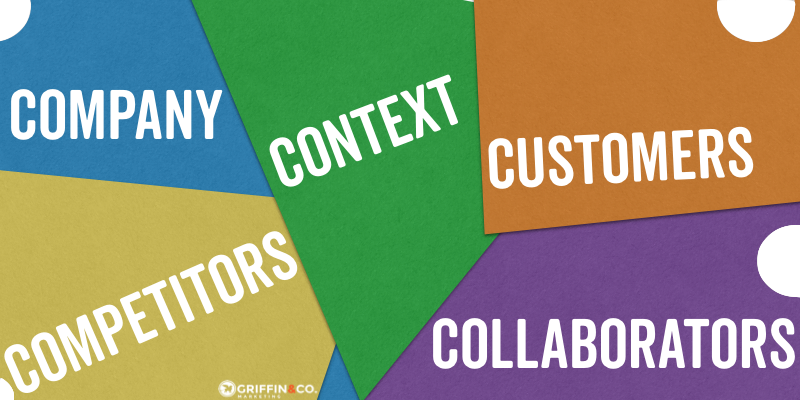
We previously touched on the 4Ps of marketing, also called the Marketing Mix, now let’s talk about the 5 C’s of marketing:
Company
Context
Customers
Competitors
Collaborators
(This is not to be confused with “The 4 Cs and Ps” - read here)
The 5 C’s of Marketing are used for constructing an effective marketing strategy:
Company: Are your company’s resources and capabilities in a position to meet customer’s needs? Start by creating a SWOT analysis HERE.
Context (or climate): Are there limitations due to political (Trade regulations, taxes, legal issues, labor laws), economic (Labor costs, growth rate), social (demographics, culture, education, etc) or technological trends (does it affect cost)? This is also called the PEST analysis.
Customers: Analyze the needs, wants and characteristics of current and potential customers. Try looking at market segments, how frequently purchases are made, how many items are purchased, will the needs of the customer change over time, etc.
Competitors: Look at the strengths and weaknesses of current and potential competitors as well as trends in the competitive environment.
Collaborators: Make a list of potential distributors, suppliers, or any other party that could help with your goals.
Companies that make use of the 5 C’s of Marketing have a clearer vision of what they can accomplish, so give it a try or give us a shout to help out!
The Marketing Mix (Often Called The 4 Ps)
Every business major in college had to take Marketing 101, but it’s always good to run a refresher course when possible. In that class, students would have learned about the Marketing Mix, also referred to as The 4 Ps: Product, Place, Price and Promotion.

Every business major in college had to take Marketing 101, but it’s always good to run a refresher course when possible. In that class, students would have learned about the Marketing Mix, also referred to as The 4 Ps:
Product
Place
Price
Promotion
The mix is especially important in designing a strategic marketing program for bringing a new product or service to market, and all of them represent what you as the business are able to control during in the process. Each one of the components should be consistent with each other, thereby creating a clear message.
What do each contain?
Place
Locations
Brick and mortar or online
Inventory levels (where is it stored?)
Product
Features
Quality
Packaging
Warranties and/or guarantees
Style
Brand name
Services
Options
Promotion
Any type of advertising (physical, online, etc)
Sales promotion
Personal selling
Publicity
Point of purchase (POP) materials
Price
Value to the customer
List price
Payment period
Rental or lease
Discounts offered (and where/why)
Credit terms
Questions to ask yourself when developing the marketing mix for your product or services:
What are your competitors doing in terms of product, price, place and promotion?
Why would your customers need this product or service?
Why would your customers need a particular feature(s)?
How could you improve your product?
We will expand more on the 4Ps in later blogs. In the meantime, let us know if we can help develop your marketing mix!
- Consumer
- Costs
- Convenience
- Communication
(The 4 Ps are Product, Place, Price and Promotion)
The idea here is that the 4Ps make you business-oriented, while the 4Cs make you more customer-centric.
- Product becomes “Consumer needs/wants”
- Price becomes “Cost to the consumer”
- Place becomes “Convenience to the consumer”
- Promotion becomes “Communication to the customer”
How To S.W.O.T. And Improve Your Marketing Plan
The S.W.O.T. analysis is a great way to find your (marketing) footing. The acronym stands for: Strengths, Weaknesses, Opportunities and Threats. This analysis works for any size business and is a valuable tool to find out where you stand and how you can move forward. The easiest way to…

The S.W.O.T. analysis is a great way to find your (marketing) footing. The acronym stands for:
Strengths
Weaknesses
Opportunities
Threats
This analysis works for any size business and is a valuable tool to find out where you stand and how you can move forward. The easiest way to think about the S.W.O.T. is that strengths and weaknesses are what’s internal to your company (what you can control) while opportunities and threats are what’s external to your company (what you cannot control).
The 4-box-chart is the most helpful visual approach. Once you have that (here’s one), start with these questions for each section:
Strengths
What does your business do well?
What do you clients say are your strengths?
What are your USP’s (unique selling points)?
What unique advantages does your company have over the competition?
What resources does your business have that others may not?
Has your company been innovative in any area?
Is your location an advantage?
Does your business have a price advantage?
Is your office culture an advantage? What about your company’s values?
What kind of certifications, qualifications or accreditations does your business have?
Weaknesses
What areas could your company improve upon?
Where is distribution more difficult?
What would your clients or competitors say are weaknesses?
What does your business NOT do well?
What unique advantages does the competition have?
What resources do other businesses have that you may not?
Is your location a disadvantage?
Does your business have a price disadvantage?
Does your business have a cost disadvantage?
Is your office culture a disadvantage? What about your company’s values?
What kind of certifications, qualifications or accreditations is your business lacking that would help?
Where is your company vulnerable?
Is cashflow an issue?
Is employee morality a negative issue?
Are there any problem areas with management?
Opportunities
First off, what kind of opportunities is your business open to?
Have there been any market developments?
What kind of trends (industry or otherwise) could your company take advantage of?
Are there any global influences that would help your business?
Do seasonal changes have a positive impact on your business?
Have there been any technological innovations that would help your business?
Have any new markets (niche or otherwise) emerged that you could take advantage of?
Are there any partnerships that would be a benefit to your business?
What kind of product developments could have other benefits?
Are there vulnerabilities within your competition?
Is there any new information and/or research that your company could use?
Are there any celebrity influencers your company could work with or piggyback off of?
How can you turn your company strengths (listed previously) into opportunities?
Threats
What kind of threats could have a negative impact on your business?
What is your competition doing that could hurt your business?
Are there any negative political effects?
Are there any negative environmental effects?
Has there been any change in market demand for your products or services?
What kind of threats might your company’s weaknesses (from your previously list) expose you to?
Have there been any market developments that would hurt your business?
What kind of trends (industry or otherwise) can hurt your company?
Are there any global influences that would negatively affect your business?
Do seasonal changes have a negative impact on your business?
Have there been any technological innovations that would hurt your business (like new automation, etc.)?
Have any new markets (niche or otherwise) emerged that somehow hurt your business?
Are there any partnerships that your competition has taken that would hurt your business?
Is there any new information and/or research hurts your company or industry?
How can you turn your company strengths (listed previously) into opportunities?
When used correctly, the SWOT analysis can help you see where your company currently stands and what improvements can be made. Don’t just limit the SWOT to your overall business, however, as it can also be used for one-off projects, new products or existing products.
If you would like to go ahead and get started on your S.W.O.T. analysis, we’ve created a helpful Word document you can download HERE. Or, if you need help figuring out your next marketing move, give Griffin & Co. a shout HERE.
The Importance of Knowing Your Audience
I recently attended a presentation by a “Digital Marketing Expert.” Yes, I was scoping out the competition. However, it seems I have nothing to worry about; and not because of his lack of knowledge or expertise, but because of, ironically, his own marketing tactics.

I recently attended a presentation by a “Digital Marketing Expert.” Yes, I was scoping out the competition. However, it seems I have nothing to worry about; and not because of his lack of knowledge or expertise, but because of, ironically, his own marketing tactics.
This particular event was hosted by a local chamber of commerce and was a 25 minute presentation from this gentleman on social media advertising, mobile marketing and websites. If I could sum up the theme, I would call it “Ways to Make Your Business Stay Trendy and Hip to Younger Audiences.” The attendees, minus myself and a few select individuals, were older business owners who may not have the most up-to-date website or know a ton about social media (hence why they came to the event).
The presentation was a well-thought-out PowerPoint and he made some really good points. Afterwards, I approached him to compliment his notes and ask if we can stay connected...then I asked for his business card. His response? “Oh I don’t carry business cards, they’re outdated.”
I understand what his method is. His company is in digital advertising, a newer medium and therefore is on the cutting edge, and business cards are a thing of the past. That may be true, but as I looked around to others asking him the same question, there was plenty of confusion across the many faces. This guy had just spent 25 minutes telling everyone his company could solve their social media problems and yet did not have a simple way for potential customers to reach out to him. Sure, people could connect with him on Linkedin or “like” his company’s Facebook page, but that’s not the audience that was in attendance, and those people would still need a name to search for. Many of these business owners were old fashioned (I talked with several of them). They like business cards. They like a simple email or phone number to reach out to and don’t want to mess with messaging on social media or finding the contact page of a website.
The point is, don’t give a presentation to small business owners who don’t know about social media and tell them you can handle their social media and then make the only way to contact you through said social media, which they would need you to show them how, but they can’t, because they can’t contact you...
Know Your Audience.
What Place Does Marketing Hold In The Strategic Plan Of An Organization?
Ask many people what they think marketing is and they will group it in the same category of sales. The truth is that marketing is way more than that, the collective process of…
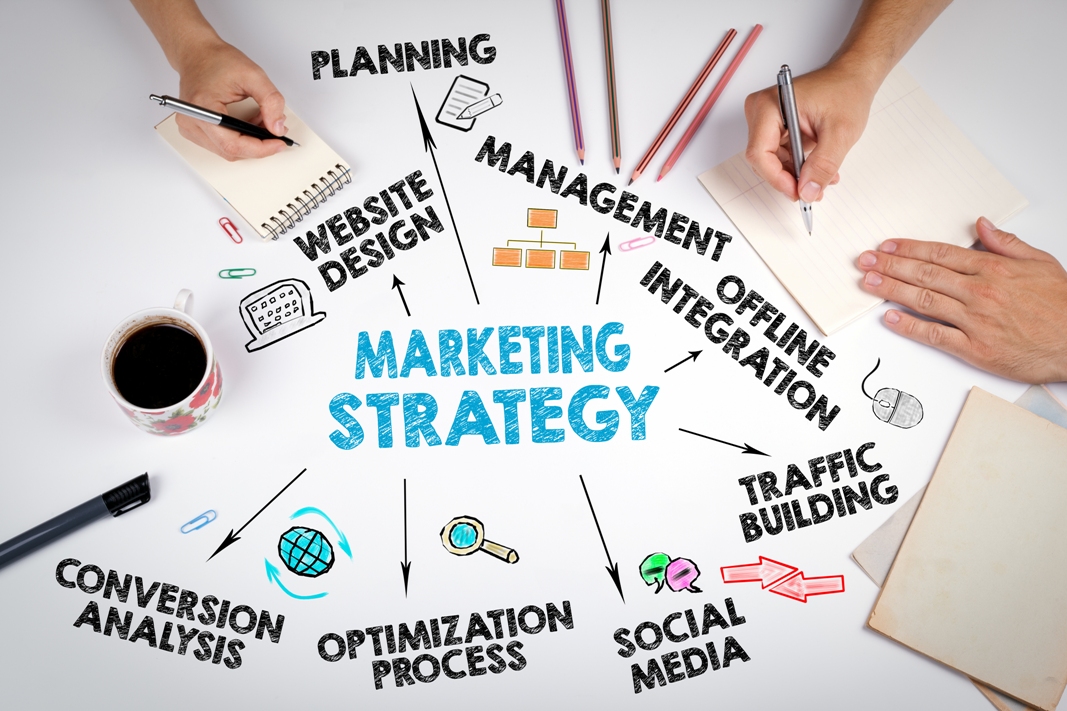
Ask many people what they think marketing is and they will group it in the same category of sales. When applying for a job, many times one will see the category of “marketing/sales” only to find out that the job is purely sales or a graphic designer position. The truth is that marketing is the collective process of things like sales, public relations, conversion analysis, traffic, advertising, community involvement, pricing, media planning, marketing research, distribution and so on. Marketing is the overall process of the inception of an idea all the way to putting the product in the hands of the consumer or business.
According to the U.S. Small Business Administration:
“Marketing is your most important organizing tool. There are four basic aspects of marketing, often called the four Ps:
Product: The item or service you sell.
Price: The amount you charge for your product or service.
Promote: The ways you inform your market as to who, what, and where you are.
Provide: The channels you use to take the product to the customer.
As you can see, marketing encompasses much more than just advertising or selling. For example, a major part of marketing involves researching your customers: What do they want? What can they afford? What do they think? Your understanding and application of the answers to such questions play a major role in the success or failure of your business.” - SBA, 2014
So, what role does marketing hold in the strategic plan of an organization? Answer: AN ESSENTIAL ONE. When, for example, a candle shop opens and wants to sell candles to consumers, where do they start? First you need to find a location that will be convenient for potential customers to find you without going way out of their way; after all, they could just go to Wal-Mart, so why go to your candle store or order from your website? Next, what advantages does your store or website have that will make people choose you over competitors? Maybe a knowledgeable staff on the products, special items that are not easily available at other places, cheaper prices, and so on. There also has to be a way to get the word out, otherwise no one will know about your store, that’s where advertising gets into the mix. Although, if you spend $100 on advertising but only sell $60 worth of products then was it worth it? That’s where media planning, pricing, and distribution/logistics come into play. The customer comes into the store, buys a product, then what? Did the customer have a unique experience? Will he or she come back? That’s where community involvement and public relations come into play.
To be successful, there has to be a way to let the customers know about you, sell the products, fix problems and still be profitable. This process is marketing and it is crucial to any organization.
References:
U.S. Small Business Administration. (Retrieved 2014). What does marketing involve? U.S. Small Business Administration. Retrieved from http://www.sba.gov/content/what-does-marketing-involve
How Marketing and Customer Relationship Management (CRM) are Connected
Every business knows that Customer Relationship Management (CRM) and Marketing go hand-in-hand. Do all of these businesses know why though?

Every business knows that Customer Relationship Management (CRM) and Marketing go hand-in-hand. Do all of these businesses know why though? By learning what customers want, the marketing can be more appropriately tailored to suit the target’s needs.
REPEAT CUSTOMERS
50, 30, even 20 years ago, the main goal was to sell a product to a customer, then move on to the next one. Now, companies have realized that repeat business can be as valuable, if not more, than one-time customers. According to About.com: Marketing, “repeat customers spend 33% more than new customers.” Colin Shaw, an “Influencer” on LinkedIn, also notes “The probability of selling to an existing customer is 60 – 70%. The probability of selling to a new prospect is 5-20%… It costs 6–7 times more to acquire a new customer than retain an existing one.” So, while gaining new business is important, it is also EXTREMELY important to keep your existing customers happy too.
CONSUMER’S VOICE
Another factor for companies to consider is not only how much monetary gain they will have from a repeat customer, but also how much of a reach that customer has to others via the Internet. If a customer is pleased with a certain product, they have the outlet to voice their positive opinion online. In the same sense, if a customer is not happy with a company or product, they can post negative comments online. Both reasons show why customer relationship management is important. Laura Lake of About.com also stated “Referrals among repeat customers are 107% greater than non-customers.” Also, maybe it’s not a bad product, but the service itself. Mr. Shaw says “A customer is 4 times more likely to defect to a competitor if the problem is service-related than price or product-related [and] for every customer complaint there are 26 other unhappy customers who have remained silent.”
ARE YOU LISTENING?
One negative review by a highly trafficked website can undo months of marketing, so it is important for companies to consider this into their marketing plan – by monitoring online activity such as blogs and social media. Another marketing item to consider related to customer relationship management is the opportunity to be connected, which can have valuable information. A customer who would like to receive emails from a company, or a customer who becomes a fan of a company on Facebook, is giving the organization an opportunity to connect with them personally, which can yield great insight into the habits, likes, and dislikes of customers or potential customers. There is also the ability to have a marketing plan that involves customer interaction. A company should strive for a customer that wants to visit their site and engage with them.
In short, marketing and customer relationship management are connected. Customer relationship management gives companies the chance to earn trust, please customers, and gain insight for their marketing plans.
References:
Lake, L. (2018). Customer relationships are key to your marketing strategy. About.com: Marketing. Retrieved from http://marketing.about.com/od/relationshipmarketing/a/crmstrategy.htm
Shaw, C. (2018). 15 statistics that should change the business world, but haven’t. LinkedIn. Retrieved from http://www.linkedin.com/today/post/article/20130604134550-284615-15-statistics-that-should-change-the-business-world-but-haven-t
Google Adwords Announces Rebranding
In the last week of June 2018, Google AdWords users across the globe received an email with important information: They are rebranding Google AdWords into Google Ads…
In the last week of June 2018, Google AdWords users across the globe received an email with important information:

That’s right! Google AdWords is going through a rebranding. According to their blog, Google states:
“We launched AdWords nearly 18 years ago with a simple goal—to make it easier for people to connect online with businesses...A lot has changed since then. Mobile is now a huge part of our everyday lives. People quickly switch from searching for products, to watching videos, browsing content, playing games and more. As a result, marketers have more opportunities to reach consumers across channels, screens and formats. The opportunity has never been more exciting, but it’s also never been more complex. Over the years, Google ads have evolved from helping marketers connect with people on Google Search, to helping them connect at every step of the consumer journey through text, video, display and more.
That’s why today we are introducing simpler brands and solutions for our advertising products: Google Ads, Google Marketing Platform, and Google Ad Manager. These new brands will help advertisers and publishers of all sizes choose the right solutions for their businesses, making it even easier for them to deliver valuable, trustworthy ads and the right experiences for consumers across devices and channels. As part of this change, we are releasing new solutions that help advertisers get started with Google Ads and drive greater collaboration across teams.”
The rest of the press release is available HERE.
For the most part, it seems that a majority of the Google Adwords (sorry, “Ads”) process will remain the same, with mostly aesthetic changes to the dashboard and logos:

Not to worry, we’ll keep you up to date with all the coming changes. At least Google was kind enough to save everyone a heart attack by assuring:
"There is no action required on your part, and changes to the Google Ads branding will not impact your campaign performance, navigation or reporting.”
-Griffin & Co. Marketing

Advertising: Is It Based On Perspective?
There’s this old Seinfeld episode that revolves around a Dockers commercial about khakis…yada yada yada Let’s talk about mass marketing vs. targeted marketing.
There’s this old Seinfeld episode that revolves around a Dockers commercial about khakis. Below is the scene and, for reference, the actual commercial in question:
The episode itself is funny (or perhaps I’m biased because I believe every episode of Seinfeld is hilarious). The unintended result of this particular episode is interesting, however, because it shows that different commercials appeal to different people, and how all advertising used to be done. I know, it’s fictional, but in reality, aren’t there commercials you don’t care for? And yet, they continue to be played because somewhere, someone has seen it and bought the product.
And it’s as simple as that - mass marketing. I don’t believe Jerry Seinfeld is the intended target for the commercial. He says, “Tan pants...why do I buy tan pants? I don’t feel comfortable in them.” His girlfriend, on the other hand, says she likes the commercial. Could it be that she was the target market? Perhaps she would buy cotton Dockers for her boyfriend? In the rest of the episode, you don’t hear George opposing the commercial. You know what else? George is always wearing cotton pants, whereas this is the only episode I can remember that has Jerry wearing khakis. I know, it’s fiction. My point is that some people buy Dockers, and that’s why the commercial existed.
Instances like this is also why internet advertising has become so effective. Why waste money on people who are not your target? With social media, Google, etc, I can get very precise on my target market, making my ROI much better.

Reading Google Analytics: Direct Traffic
If you use Google Analytics (which, you definitely should be doing), you know that there are different “sources” of how people arrived to your website. The default types of traffic, or mediums, are: Direct, Organic, Paid and Referrals. Let’s talk about “Direct” traffic.

If you use Google Analytics (which, you definitely should be doing), you know that there are different “sources” of how people arrived to your website. The default types of traffic, or mediums, are: Direct, Organic, Paid and Referrals. Let’s talk about “Direct” traffic.
How about we start with Google’s definition?
“Source: Every referral to a website has an origin, or source. Possible sources include: ‘google’ (the name of a search engine), ‘facebook.com”’(the name of a referring site), ‘spring_newsletter’ (the name of one of your newsletters), and ‘direct’ (users that typed your URL directly into their browser, or who had bookmarked your site).”
Ok, but is there more beyond just direct URLs and bookmarks? Yes. Any kind of traffic that cannot be recognized is categorized as “Direct” by Google Analytics, which means:
Users using incognito/private browsing mode
As reported from other sources, there can be as much as an estimated 7% of organic traffic being shown as direct.
Many times, apps and other mobile traffic sources are often marked as “Direct.”
When a user follows a link on a secure (HTTPS) page to a non-secure (HTTP) page
I know, it’s frustrating. The good news is that you can help avoid many false “direct” traffic readings by adding parameters to URLs to identify the campaigns that refer traffic. HERE’S HOW.
References:
Traffic Source Dimensions. Google Analytics Help. (2018). Source: https://support.google.com/analytics/answer/1033173?hl=en
Google Makes It Even Harder to Estimate Missing iOS 6 Organic Search Data. Search Engine Watch. (2018). Source: https://searchenginewatch.com/sew/how-to/2274278/google-makes-it-even-harder-to-estimate-missing-ios-6-organic-search-data
Custom campaigns: Add parameters to URLs to identify the campaigns that refer traffic. Google Analytics Help. (2018). Source: https://support.google.com/analytics/answer/1033863?hl=en

Some Quick Stats About Mobile and Marketing
Mobile usage continues to grow. If you haven’t made a plan to utilize mobile advertising, it’s way past time. Do you use email marketing? According to Return Path, a company who focuses on email marketing data, mobile accounts for 55% of the open rate, which is up from 29% in 2012…
Mobile usage continues to grow. If you haven’t made a plan to utilize mobile advertising, it’s way past time. Do you use email marketing? According to Return Path, a company who focuses on email marketing data, mobile accounts for 55% of the open rate, which is up from 29% in 2012.
What about when it comes to search? Google reports that since 2015, more searches take place on mobile over desktops. In the current day and age, mobile searches account for OVER HALF of all searches. Google also reports that 51% of smartphone users have found a new company/product when searching with their mobile device.
What about social media? According to Statista, as of January 2018, over 95% percent of active Facebook user accounts use their smartphone to access the social networking site, compared to only 32% using their desktop.
For all of these reasons, and many, many more, it’s time to make mobile a priority in your business. Do you already have a responsive website? How mobile friendly is your company? If you’ve got questions, we’ve got answers.
References:
Mobile is Now the Preferred Platform for Reading Email with More than Half of All Email Opens. (2017). Return Path. Source: https://returnpath.com/newsroom/mobile-now-preferred-platform-reading-email-half-email-opens/
What We Searched for in 2015, and What That Means for Marketers. (2015). Google. Source: https://www.thinkwithgoogle.com/advertising-channels/search/what-we-searched-for-2015/
Being there in micro-moments, especially on mobile. (2015). Google. Source: https://www.thinkwithgoogle.com/marketing-resources/micro-moments/being-there-micromoments-especially-mobile/
Device usage of Facebook users worldwide as of January 2018. (2018). Statista. Source: https://www.statista.com/statistics/377808/distribution-of-facebook-users-by-device/

Viral vs. Valuable Marketing
Seth Godin, known to many as the “Marketing Guru,” defines viral marketing as, “an idea that spreads–and an idea that while it is spreading actually helps market your business or cause (Godin, 2008).”

Seth Godin, known to many as the “Marketing Guru,” defines viral marketing as, “an idea that spreads–and an idea that while it is spreading actually helps market your business or cause (Godin, 2008).”
In television and movies, viral marketing is often portrayed as any advertising done on social media sites such as Facebook, Twitter, or YouTube. However, this is not viral marketing, only online marketing. Dictionary.com defines viral as, “pertaining to or involving the spreading of information and opinions about a product or service from person to person, especially on the Internet or in e-mails” as well as “becoming very popular by circulating quickly from person to person, especially through the Internet (Dictionary.com, 2018).”
The main purpose of viral marketing is to push a message out so unique and clever that people want to spread it. Many times the way in which this is achieved is by doing a commercial where the brand is not highlighted as much as the story or message. An example can be found in one my all time favorite commercials, Kmart’s ship my pants. While some may consider the humor crude, the commercial was entertaining enough to receive oh-so-many retweets on Twitter, over 16 million YouTube views, and even media attention. USA Today reported, “Some social media users deemed the commercial, created by ad agency Draftfcb Chicago, ‘gross’ and ‘vulgar,’ while many gave kudos to Kmart for having an edgy sense of humor (Petrecca, 2013).”
The Kmart commercial went viral, but did it earn Kmart extra business? Those numbers are harder to track and as Seth Godin also points out, “Something being viral is not, in an of itself, viral marketing. Who cares that 32,000,000 people saw your stupid video? It didn’t market you or your business in a tangible, useful way (Godin, 2008).”
In the current year of 2018, there are so many social media sites it can be difficult to navigate through them, but businesses have found different ways to utilize and harness this power. People are talking on these social media sites, so why not have them talk about a brand? The trick is to find a way to convey a business message or brand through a creative way that makes it seem like it’s not a commercial. If done correctly, people will want to share what they have seen on YouTube, Twitter, Facebook, and more.
As Dave Kerpen, author of Likeable Social Media, once stated, “Videos that ‘go viral’ are more often than not accidental! Creating a video with the intent of it going viral is bound to fail. Rather than having a goal of ‘going viral’ you should have a goal of ‘being valuable.’ Create content that is valuable, entertaining, and informative (Kerpen, 2012).”
References:
Godin, S. (2008). What is viral marketing?. Seth’s Blog. Retrieved from http://sethgodin.typepad.com/seths_blog/2008/12/what-is-viral-m.html
Kerpen, D. (2012). How to: Make a viral video. Likeable Media. Retrieved from http://www.likeable.com/blog/2012/07/how-to-make-a-viral-video/
Petrecca, L. (2013). Kmart’s ‘ship my pants’ ad causes shockwaves and smiles. USA Today. Retrieved from http://www.usatoday.com/story/news/2013/04/15/kmart-ship-my-pants-commercial-ad/2084131/
Viral. (2018). Dictionary.com. Retrieved from http://dictionary.reference.com/browse/viral?s=t